"Since working with Advanced Robot, milk yield increased significantly from 29 to 35 kilograms, but milk solids have also been sustained at 4.6% butterfat and 3.4% protein, with total milk solids at 2.73 kilograms sold."
Assess space to support herd mobility
Lessons can be learned from progressive herds about the importance of improving herd mobility by optimising cow comfort. First published in Cow Management
Lameness continues to be one of the biggest barriers to optimising herd performance and, although recent years have seen a wealth of researcg and increased industry awareness about mobility, ARN's Greg Leishman believs that this knowledge fails to be translated consistently to producers.
“When we assess herd mobility on UK units, the issue is sometimes education and it can also be prioritisation, with day-to-day firefighting pushing mobility down the to-do list. In some cases, the problem simply feels too big to know where to start,” he says.
Mr Leishman adds that producers need to look beyond visibly lame cows towards prevention and also understand the hidden costs of poor mobility, such as the negative impact on feed intakes, milk yield, fertility and longevity.
“Mobility are connected to so many areas of herd performance including cow comfort, transition management and fertility. An understanding of those links is key to tackling the problem effectively.”
He says that the more progressive herds he works with recognise this and they look for early indicators to mobility and lameness issues.
Understanding the cow environment, is a good place to start for producers. Greg notes, “We should be asking the question – is this environment somewhere where the cows are comfortable and able to express their natural behaviour? Avoid simply asking if cows are lame?”
Mr Leishman urges producers to start by assessing the cubicle environment, and ensure that there is sufficient space for each cow to express her natural lying behaviour without restriction.
“Begin by measuring the cubicle and assessing the position of the neck rail and brisket board. The important question is - can the cow lie down and rise naturally, while remaining straight and comfortable within the cubicle?”
“For a modern Holstein cow, allowing approximately 178–183 cm of usable space from the curb is a good starting point. However, in practice, the position of the neck rail can significantly reduce the space available to the cow. If positioned incorrectly, the neck rail can restrict forward movement and prevent the cow from using the cubicle as intended. In some cases, this can effectively negate the benefit of having a brisket board.”
Neck rails
The good news is that adjusting neck rails can be a simple, cost-effective way to create more cubicle space, improving cow comfort and occupancy with minimal investment. The cranked neck rail is an example of this adjustment, allowing cows to enter, lie down straight and position themselves comfortably without repeated adjustments.
“If the cubicle design forces cows to adjust their position, they may lie across the cubicle, reducing occupancy as neighbouring cows can be reluctant to lie beside them. The result can be poorer cubicle occupancy, with the greatest impact often falling on the cows most at risk. These are typically the least dominant animals in the herd, including heifers, freshly calved cows and cows already experiencing mobility issues. Ensuring the cubicle allows these animals to rest comfortably and access lying space without unnecessary competition is key to effective cow-comfort management.”
“These at-risk cows should be a focus when improving the cow environment. While the highest-performing cows may already be close to their potential, the biggest gains often lie in the middle to lower end of the herd. Removing environmental limitations can help lift performance among these cows and give more of the herd the opportunity to reach its potential.”
“Maximising usable cubicle space can increase lying time and occupancy. In a 100-cow herd, saving just one minute each time cows enter or leave their cubicles, 8–10 times a day, could provide 800–1,000 extra minutes of potential lying time daily simply by making better use of existing space.”
A joined-up approach is a common feature of progressive herds, he adds. Having a clear plan ensures that everyone involved, including your nutritionist, vet, foot trimmer and the wider farm team, understands where the problems lie and, crucially, what they are trying to achieve.
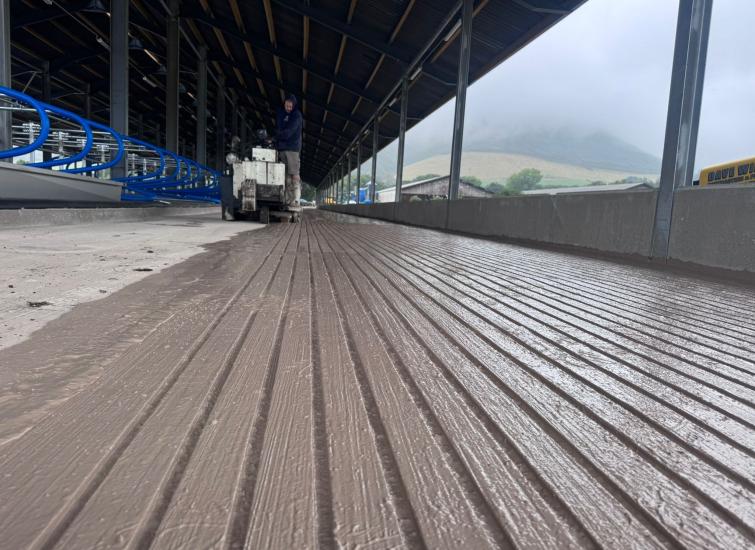
Qualified foot-trimming and cow comfort and flooring specialist, Joe Kirby agrees that collaboration is essential when tackling mobility challenges and says that flooring that provides optimum grip for walking is non-negotiable when its comes to cow comfort and mobility.
"Grooved concrete can provide good grip, with the tactical use of rubber in areas where additional comfort and traction are needed. Look at the cow’s entire journey through the building and identify where she may be losing confidence or slipping.”
When investing her urges producers to weigh the cost of the problem against the potential return. "Identify your limitations and what you can realistically address within budget."
Greater confidence
"For example, if slipping causes three mobility-related culls a year, improving the flooring could potentially pay for itself within a year. Look beyond the upfront cost and consider the cost of doing nothing."
Mr Leishman adds that improving grip does more than reduce slips.
"Greater confidence can encourage more consistent movement and feeding, increasing DMI and potentially improving milk yield, milk solids and conception rates.” explains Mr Leishman.
Ultimately, good mobility is about creating an environment where the cow feels confident to move freely and express her natural behaviour. "When we remove the physical barriers that restrict her, whether that is poor cubicle design, inadequate space or slippery flooring we give the cow the opportunity to spend more time resting, eating, drinking and moving as she naturally would."
〈 BACK