We’ve worked with Advanced Ruminant Nutrition for over two years, and they’ve been instrumental in helping us meet our goals since transitioning to robotic milking.
Tips to Improve Maiden Heifer Fertility
A systematic approach to identifying bottlenecks in heifer rearing to improve consistency is key to hitting growth targets, boosting fertility and increasing lifetime productivity. First Published in Cow Management
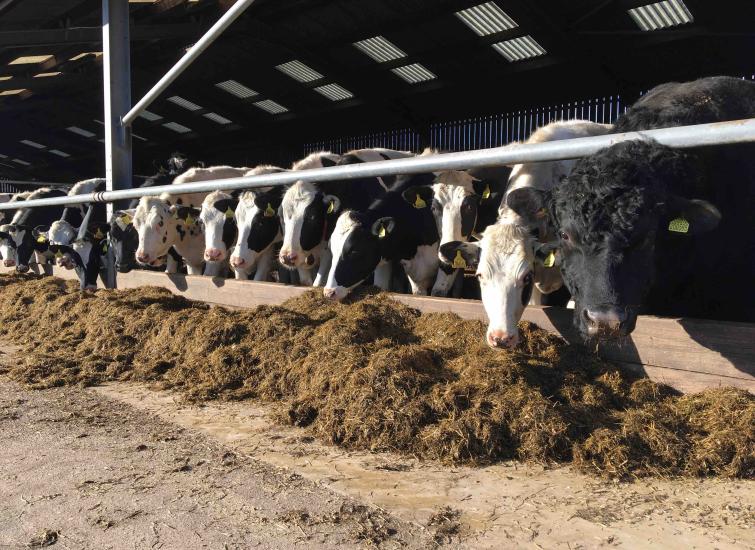
Achieving an average age at first calving of between 22 and 24 months, within as tight a range as possible, is essential for maximising dairy herd profitability. Hitting this target supports greater lifetime milk production, improved longevity and reduced rearing costs. In fact, trial work from the Agri-Food & Biosciences Institute shows that reducing age at first calving can increase lifetime milk yield by 13%. Achieving target age at first calving (AFC) not only ensures the greatest economic return it also allows heifers to reach their full genetic potential, according to Advanced Ruminant Nutrition’s Rosie Armstrong. “It also plays a key role in protecting the welfare of incoming heifers through improved performance and less risk during calving,” adds Dr Armstrong. “If heifers are to calve at the optimal time, they must first conceive at between 13 and 17 months old, making maiden-heifer fertility a critical focus area.”
She and the company’s Liz Lunn (Newman) agree that there is limited scientific research defining clear benchmarks for performance. After analysing a wide range of data, it’s clear that many herds monitor key performance indicators (KPIs) related to maiden heifer fertility, but industry-wide progress has been minimal. “During the past two decades, little has changed in the fertility metrics that are typically measured on dairy units,” says Miss Lunn.
Valuable insights
“On most units, conception rate in maiden heifers and the number of inseminations per pregnancy are routinely recorded. Cull data can also provide valuable insights, particularly where maiden heifers are removed for fertility-related reasons or where first- and second-lactation animals fail to remain in the milking herd. In many cases, these animals will fall short of covering their rearing costs,” she adds.
First-lactation milk yield is another indicator of good growth. A well-grown heifer entering the herd at the correct stage of development should yield approximately 82% of the milk of a mature cow. Where heifers enter the herd underdeveloped or over-conditioned, they often fail to reach this potential. Importantly, getting heifers in calf early will only benefit the herd if they calve at the optimal size, frame and health status,” explains Miss Lunn.
The company’s team has analysed maiden-heifer fertility data from more than 50 herds during the past five years. Across these herds, average AFC has decreased by 1.2 months, but there has been little change in other key fertility indicators. Notably, no significant correlation was found between conception rate and AFC. This indicates that reducing AFC in healthy heifers would still maintain the same level of maiden-heifer fertility.
While overall averages suggest limited change in conception rates, individual farm data often tell a different story. On-farm monitoring can highlight emerging trends early, allowing issues to be addressed before they have a major impact on age at first calving and rearing costs.
On one dairy unit, after interrogating herd data, a decline in heifer conception rate of more than 10% during a six-month period was identified early through routine monitoring. This allowed the producer to investigate and rectify the issue before AFC increased significantly.
Identifying bottlenecks
When fertility issues are identified in maiden heifers, it is essential to take a whole-system approach before implementing changes. A wide range of factors can influence fertility, and prioritising the key bottlenecks will have the greatest impact. Common challenges include: poor growth rates or frame at first service: inconsistency in diets around breeding; vitamin and mineral deficiencies; ineffective heat detection; and poor AI technique or semen handling.
Robust data analysis, combined with collaboration between farm teams, vets, nutritionists and breeding advisers, is key, according to Miss Newman. “Setting clear targets, understanding why they are being missed and monitoring progress over time allows informed decisions to be made.”
She recently worked with a herd to tackle poor maiden-heifer fertility. The conception rate sat at 38.7%, with an average of 3.67 inseminations per pregnancy. The AFC was 25.3 months, which was higher than the producer’s target. Working with the farm team and vet, using genetic reports, a thorough review was carried out.
“Breeding records revealed irregular heats, with unusually short and inconsistent intervals between services,” says Miss Newman. “Heifers were also over-conditioned, and testing identified a deficiency in iodine – a trace mineral known to influence oestrus expression.”
The heifer ration was subsequently balanced to meet vitamin and mineral requirements, body condition was controlled, and dietary consistency was introduced. Conception rates improved significantly, with the number of inseminations per pregnancy falling from 3.7 to 1.7. The herd hit the AFC target, with conception rate increasing to 57%.
“This case highlights the importance of a balanced diet formulation during the rearing phase to support growth and frame development while avoiding excess body condition and ensuring micronutrient requirements are met,” she says.
Strong emphasis must be placed on growing heifers for frame rather than allowing them to lay down excess condition. Another herd Miss Newman worked with had an average AFC of 25.3 months and, while this was within an acceptable range, the producer was keen to push performance further. Initial consideration was given to serving heifers earlier, but weight and size assessments showed they were not physically ready.
Growth rates
Weighing heifers at multiple rearing stages revealed that growth rates fell below target from weaning onwards. “Post-weaning diets relied too heavily on grass silage for animals with underdeveloped rumens, leading to reduced growth and increased disease pressure,” explains Miss Newman. “Early-life feeding strategies had prioritised growth rate without sufficient focus on rumen development.”
The dairy team made targeted changes to milk-feeding protocols, post-weaning nutrition and later-stage diets. These adjustments optimised growth rates, supported rumen development and allowed heifers to reach service weight earlier. As a result, age at first service and calving were reduced, and the younger-calving heifers went on
to produce higher milk yields than those calving later in previous years.
“The take-home message from this herd’s experience is the importance of size and maturity. Heifers should reach 50% of mature body weight by 12 months of age, with first service targeted at between 55% and 60% of mature weight. Serving closer to 60% consistently delivers better conception rates.”
While these are just two examples of the typical bottlenecks Miss Newman sees on units, there are several practical areas that youngstock rearers and producers can focus on to help improve maiden-heifer fertility.
“Set clear and realistic targets that the herd, system and business can meet,” she says.
“Identify any bottlenecks that are limiting maiden-heifer fertility and address them, and measure and monitor progress to ensure the changes made deliver results.
“Ultimately, success comes down to: checking that heifers are the optimal weight, height and body condition; providing a consistent, well-balanced diet; ensuring effective heat detection, and following good AI practice. Tick all these boxes and improved heifer fertility will follow.”
〈 BACK