"Since working with Advanced Robot, milk yield increased significantly from 29 to 35 kilograms, but milk solids have also been sustained at 4.6% butterfat and 3.4% protein, with total milk solids at 2.73 kilograms sold."
Managing grazing as a way to optimise performance
Optimising grass management can help support individual farm financial production and herd health targets. First Published in British Dairying.
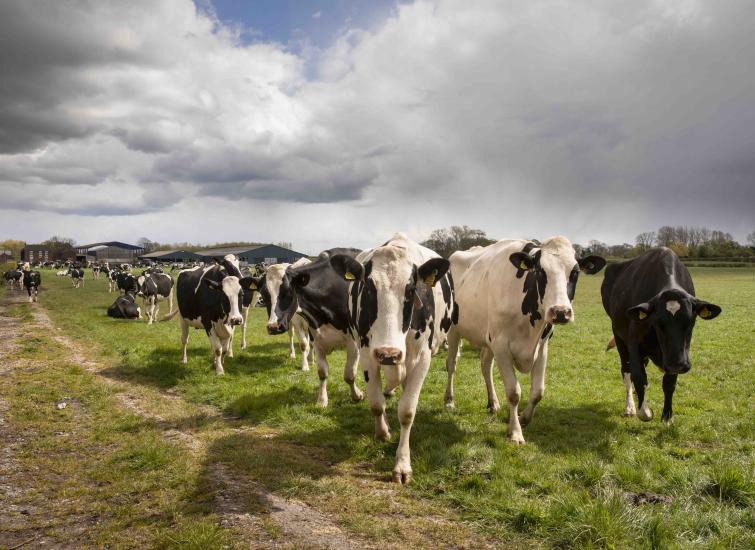
Grazed grass remains appealing as a potentially low-cost feed source for dairy systems, especially in challenging market conditions. However, its value depends on how well it’s managed in order to realise its potential according to Dr. Rosie Armstrong, vet nutritionist at Advanced Ruminant Nutrition (ARN). “Managed correctly, utilising grass effectively, can help dairy farmers maintain good margins, but it isn’t for every farm.”
For either existing extensive grazing systems, or dairy farms looking to introduce or re-introduce grazing into the system, there a few fundamentals to consider.
Firstly when assessing a grazing strategy, it’s crucial to monitor grass composition and ground conditions as well as cow health and productivity KPIs. Having this information to hand will allow informed decisions and targeted nutritional management, including any supplementary feeding to balance the diet.
Understand what’s on the ground
The team at Advanced Ruminant Nutrition, recently undertook a grass monitoring study in Southwest Scotland, tracking grass quality from February through to December. One of the key findings was that grass quality remained consistently suitable for grazing throughout the entire period. From February to December, grass availability and sward quality were never limiting factors.
Across the monitoring period, dry matter (DM) ranged from 16–25%, while crude protein ranged from 28.5% down to 17%. Interestingly, energy density remained relatively stable, ranging only from 11.2 to 12.5 MJ/kg DM. Sugars varied between 5–12%, and neutral detergent fibre (NDF) ranged from 38–52%.
“The study illustrates the value of information for grazing herds," says Rosie. Utilising this data enables cost effective management and nutritional decisions that can improve performance without compromising overall farm margin.”
“The data highlighted that grass is consistently edible throughout the grazing season. However, protein and NDF levels require active management. Understanding where these parameters sit at turnout and during key transition points in the grazing season is essential for effective nutritional management at grass, beyond the single most critical factor, which remains dry matter intake (DMI).”
NDF is an important energy source but also plays a crucial role in maintaining rumen health. Dr Armstrong explains that very early spring grass typically has lower NDF, which then gradually increases as the grass matures through the season. “Depending on weather conditions and growth patterns, a mid-season dip in fibre quality can sometimes occur. Monitoring grass regularly allows feeding strategies to be adapted quickly if required.”
Grazing dairy cattle are at increased risk of reduced rumen pH when grazing grass with a lower fibre (NDF) content. “A drop in rumen pH can negatively affect performance and milk production. Low rumen pH is also associated with several indicators, including poor faecal consistency and reduced milk fat. In more severe cases, it can be linked to conditions such as abomasal displacement, ulceration, and caudal vena cava thrombosis. These issues impact both cow health and welfare, as well as milk production – so has an economic impact.”
Protein management
“The risk is related to milk yield, with higher yielding cows under greater metabolic pressure and therefore less able to cope with periods of low rumen pH compared to lower yielding cows.” This is especially relevant where housed herds are looking to introduce grazing as a cost control program.
A study in Ireland on subacute ruminal acidosis (SARA), assessed rumen health by looking at parameters such as rumen fluid, milk production, pasture composition and animal health and found that 11% of grazing dairy cows had a rumen pH ≤5.5, 42% had a marginal pH (5.5-5.8) and 47% had a normal rumen pH. “This shows that low rumen pH can be common in grazing based dairy herds due to variability in grass NDF levels. Having this information to hand will allow nutritional formulations to be adapted to promote rumen health.”
Protein management in the parlour is important throughout the grazing season, as grass often exceeds the metabolic demands of lactating dairy cows. Spring grass typically provides a surplus of rapidly degradable protein, so the crude protein content of concentrate formulations can usually be reduced. This is reflected in the study data, enabling more accurate ration formulation and preventing excessive supply of protein. This helps to ease the metabolic burden on the cow and avoids unnecessary input costs as a result of including more protein that is needed.
The study data highlights that grass is consistently edible throughout the grazing season. Ration adjustments should prioritise the synchronisation between rumen degradable protein and metabolisable energy to reduce unnecessary protein inputs and improving nitrogen efficiency, as well as management of the NDF fraction for effective nutritional management at grass.
“The dataset shows a range in nutritional values, the key question is how we respond to them. Having the ability to proactively manage grazing challenges will allow farmers to maximise the use of low-cost grazing whilst promoting overall cow health and welfare.” explains Rosie.
For grazing‑based dairy systems, aligning pasture utilisation with milk production presents a core optimisation challenge. Maximising strategic grazing efficiency must be coupled with the scope to implement nutritional changes to maintain herd performance and safeguard overall farm margins.
Key points:
- Grass quality isn’t the challenge in the UK, it’s knowing how much the herd can and are eating
- Ground conditions and managing grass growth (including grass covers) should be a priority
- Use grass analysis (similar to grass silage) to enable proactive nutrition management, whether that is adjusting buffer feed formulation or in-parlour compound formulations.
- Rumen pH can be compromised and while moderate yielding grazing herds can cope, care must be taken if higher yielding herds reintroduce grazing
〈 BACK